

How to Get Benin Citizenship Through the Afro-Descendant Program (Step-by-Step Guide)
Over the past few weeks I applied for Beninese citizenship through the My Afro Origins program, and I realized something


Are you still thinking about planning a two-week trip to Europe and feeling a little stuck? Look, I get it. Planning can be overwhelming and time-consuming, but I’m here to help. I believe one of the most important things is being honest with yourself about the type of experience you want to have and your budget. That’s a solid start.
I remember the day I planned my two-week Europe itinerary like it was yesterday. I was still getting the hang of traveling solo, backpacking, and going through multiple countries. I made a few mistakes, but the good thing is that I am now able to help you avoid those same mistakes by preparing properly.
Many ask, “How did I come up with my two-week itinerary for Europe?” For starters, I was certainly short on vacation time because my job only gave us two weeks off every year. Therefore, I chose to pack as many destinations as possible into that time frame to make the most of my trip. Additionally, I made sure to find the cheapest flights because I’m a budget traveler. So, these factors played a huge part in the planning process, and I just went from there.
To be honest, if I could find a free seat on the Mayflower to get me there, I’d likely book it! That’s how cheap I am.
The good news is that this itinerary can be used any time of the year. However, keep in mind that I usually travel during the off-season, from October to November, when prices are much cheaper and there are fewer crowds.
Also, there are many alternative routes, and you can tweak this two-week trip to Europe itinerary to fit your needs. I believe it’s a solid starting point, especially for budget, solo, and first-time travelers.
What should you expect from this guide? You should expect a list of must-see European destinations and undiscovered places, useful travel advice, budget tips, eco-friendly tips, and memoirs highlighting the wonder of unscheduled journeys. I hope that my experiences encourage you to explore, get lost, and discover the treasures that are waiting around every corner, regardless of whether you are an experienced traveler or planning your first trip. Just get out there!
Remember that getting lost can be part of the fun. Trust me, you’ll always find your way back, and the memories you make will be priceless.
Just so you know this post contains some affiliate links. Completely free to you, I may earn a small commission when you make a purchase.
Now that’s out the way, lets jump into the good stuff.

"Taking that first step, that first flight, first solo trip may seem scary, but it's those very first things that can potentially take you a thousand miles and places."
-The Bearded Backpacker Tweet
I’ll be honest with you: I don’t create set schedules when I travel. I love the freedom to just go and get lost. For me, sticking to a strict timetable takes the fun out of things and makes me feel rushed, which causes me to miss out on unique moments. Instead, I make a list of places I want to see and go from there.
This approach has led to some of my best experiences. In Venice, I wandered like a child through narrow alleys and over countless bridges, getting lost multiple times. In those moments of being lost, I stumbled upon hidden cafes and charming piazzas and had wonderful conversations with locals.
In Bratislava, I wandered through the old town, talking to shopkeepers and tasting local street food. Each corner brought a new experience, making the journey far richer than any planned itinerary could offer.
This is the 2-week itinerary I followed while in Europe.
I’m sure all my fellow backpackers can back me up on this: the adrenaline rush of traveling through multiple countries simultaneously is unmatched. It’s literally a high—a good one. So, I am sure you will enjoy this.
Feel free to rearrange these or swap them out for other iconic destinations.
| Day 1: | Depart from Houston (IAH) |
| Day 2: | Venice, Italy |
| Day 3: | Venice, Italy |
| Day 4: | Venice, Italy to Vienna, Austria |
| Day 5: | Vienna, Austria |
| Day 6: | Vienna, Austria |
| Day 7: | Vienna, Austria |
| Day 8: | Vienna, Austria to Bratislava, Slovakia to Budapest, Hungary |
| Day 9: | Budapest, Hungary |
| Day 10: | Budapest, Hungary |
| Day 11: | Budapest, Hungary to Rome, Italy |
| Day 12: | Rome, Italy |
| Day 13: | Rome, Italy |
| Day 14: | Rome, Italy to Florence, Italy |
| Day 15: | Florence, Italy |
| Day 16: | Florence, Italy |
| Day 17: | Florence, Italy to Venice, Italy, Arrive in Houston |
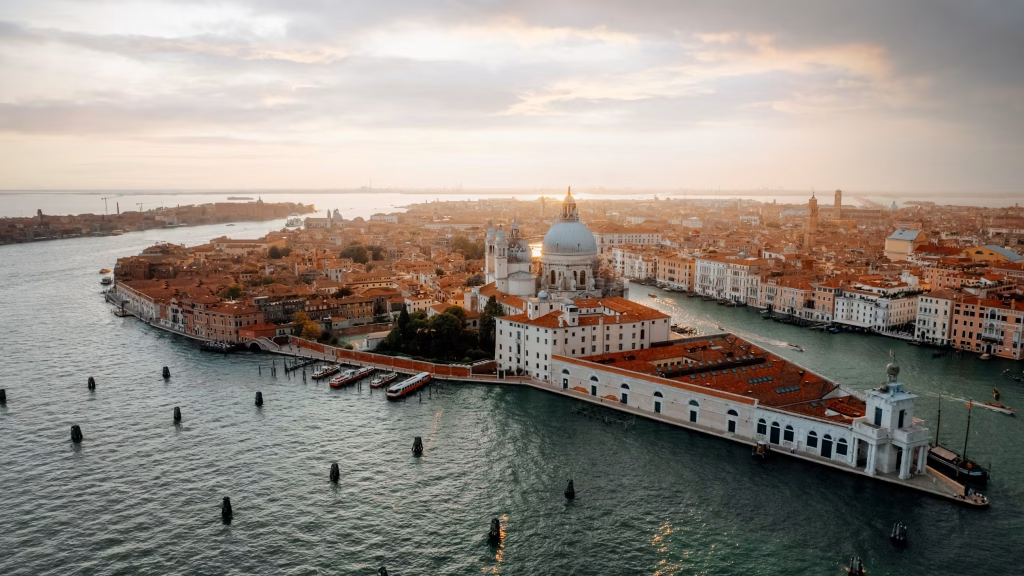
Walking through the twisted canals and narrow streets of Venice felt like stepping into a different world. The detailed design of the city, which hasn’t altered much since the Middle Ages, provides a rare glimpse into the days when Venice was a powerful coastal republic. Established in 421 AD, Venice expanded rapidly from a group of minor islands in the Venetian Lagoon to become a powerful trading nation by the tenth century. The city’s historical richness is evident everywhere.
I still recall when I first saw St. Mark’s Basilica. Built in the 11th century, this stunning mosaic appeared to tell stories of lavish parties and Venetian merchants as they sparkled in the sunlight. I was fascinated by the city’s eternal charm and extensive past. Something lovely was visible around every turn.
An afternoon spent in the Rialto Market was one of my favorite experiences. The lively colors of fruits and vegetables, and the scent of freshly caught fish, attracted me. I had a pleasant encounter with Paolo, a kind vendor who gave me a sample of his homemade prosecco. I think about this often.
Day 1: Hitting the Ground Running
I flew from Houston overnight and arrived at Venice Marco Polo Airport (VCE) about 9am the next morning. I boarded a bus afterwards, which took me to my hostel. There is something special about landing in a foreign country just as the sun rises.
St. Mark’s Basilica
Doge’s Palace
Ride a Gondola
Lunch at Ristorante Antico Martini
Rialto Bridge
Ice Cream at Suso Gelatoteca
In the afternoon, I treated myself to some gelato at Suso Gelatoteca . I think I had Gelato every day of the trip.
Dinner at Osteria al Portego
Day 2: Hidden Gems and Local Flavor
Peggy Guggenheim Collection
Crepes at La Bottiglia
Dinner at Latteria2465
Getting Around Locally:
Transportation:
Accommodations:
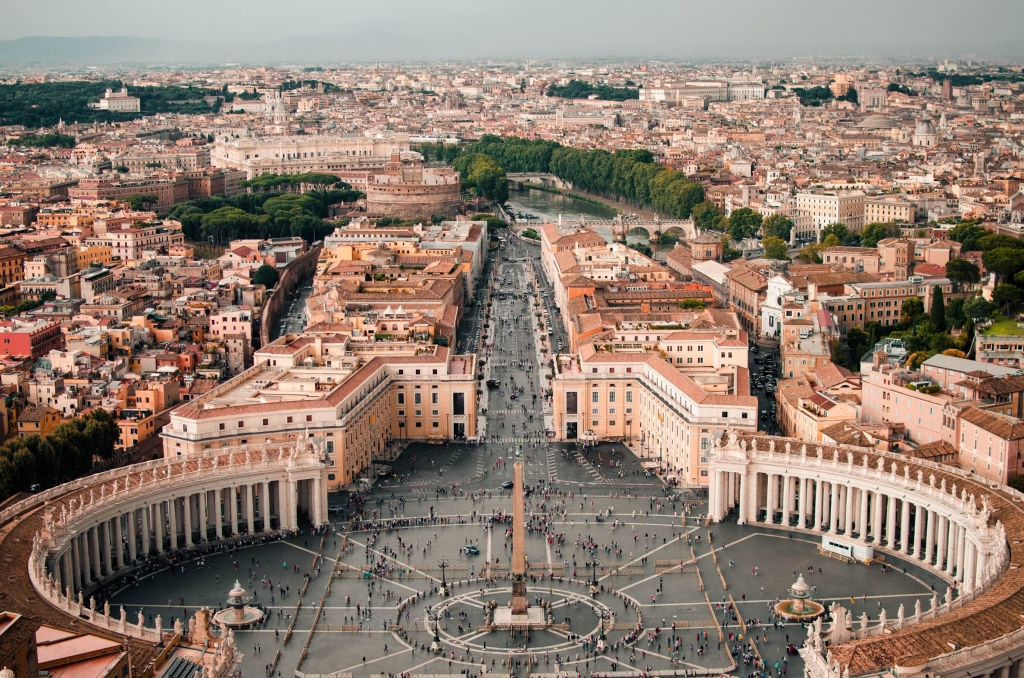
Visiting Vatican City felt like entering a world of art and history. As the world’s smallest sovereign enclave, its roots can be traced back to 1929 when it became an independent state thanks to the Lateran Treaty. It is a place rich in history and beauty. Vatican City, the spiritual hub of the Roman Catholic Church, holds great cultural and religious significance despite its small size.
St. Peter’s Basilica was my first destination. This famous church was established in 1626 and is located on the alleged burial site of St. Peter, the first pope and one of Jesus’ apostles. I was astounded by its enormous size and magnificent architecture as I entered through the massive doors.
It was a full-circle moment for me because I grew up watching the crowd gather in St. Peter’s Square on television during Pope John Paul II’s funeral. This event, which happened in 2005, highlighted the Vatican’s impact on billions of people worldwide and served as a global time of contemplation and grief.
I had no idea that a decade later, I would be standing in the same square that had seemed so far away, experiencing the tangible link between the past and the present.
Arrival
St. Peter’s Basilica
Lunch at Ristorante Arlu
Afternoon Stroll
After lunch, caught a good sunset.
Time to Leave
Transportation:


Rome’s streets gave me the impression of being transported back in time. I still recall my first impression of the Colosseum. Built between 70 and 80 AD, the ancient stones lit up in the evening light, seemingly telling stories of brave soldiers and powerful rulers. The amount of history in this city was astonishing. There was something interesting to see wherever I looked.
My fondest memory is of visiting the Campo de’ Fiori market in the morning. The air was filled with the aroma of freshly brewed coffee, and the colorful fruits and flowers looked amazing. I got to know Maria, a kind local, who gave me a taste of her handmade limoncello. Even for a brief moment, I felt like I belonged there because of her kindness and the lively market.
Rome made a lasting impression on me with its blend of bustling streets and ancient ruins. In this city, history comes to life, and new adventures await every day. I left with a heart full of memories and a promise to return someday.
Colosseum
Roman Forum
Ride Scooters to Dinner
Dinner at Da Enzo al 29
Piazza Navona
Pantheon
Trevi Fountain
At the Trevi Fountain, I tossed a coin and made a wish.
You have to go either very early in the morning or late in the evening to avoid the massive crowds.
Getting Around Locally:
Transportation:
Accommodations:
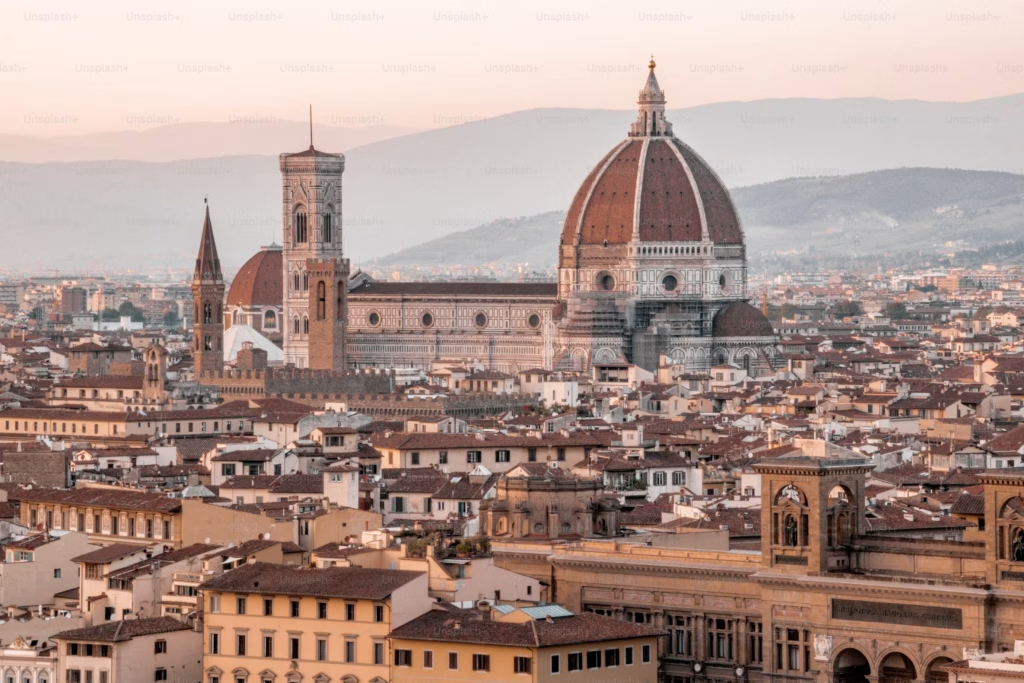
Exploring Florence felt like entering a Renaissance artwork. Art and history permeated the city, and I was eager to explore. The famous Duomo, also known as the Cathedral of Santa Maria del Fiore, was my first stop. Its magnificent, red-tiled dome, designed by Filippo Brunelleschi and completed in 1436, is a wonder of Renaissance architecture.
The vista of the city below, with its sea of terracotta rooftops and the undulating hills of Tuscany in the distance, made the climb to the top worthwhile.
My favorite part of the trip was exploring the Uffizi Gallery. The gallery, founded in 1581, holds one of the most important collections of Renaissance artworks. I was in awe in front of works by Michelangelo, Botticelli, and Leonardo da Vinci. My favorite painting was “The Birth of Venus,” a 1480s masterpiece by Botticelli. Seeing such amazing art up close was a dream come true.
The cuisine in Florence was excellent. I recall having a wonderful supper at a tiny trattoria. The pasta was fresh, and the sauce was rich with flavor. The accommodating proprietor, Luca, suggested a regional wine that complemented the meal perfectly.
Uffizi Gallery
Lunch at Trattoria Mario
Piazza della Signoria
Dinner at Osteria Vini e Vecchi Sapori
Walk Along the Arno River
Accademia Gallery
Started the day with a visit to see Michelangelo’s David.
San Lorenzo Market
Explored this busy market and sampled local foods.
Boboli Gardens
Spent a relaxing afternoon in these landscaped gardens.
Pitti Palace
Explored the grand palace, including the Palatine Gallery, Royal Apartments, and the Museum of Modern Art.
Sandwichic
Enjoyed some affordable street food.
Gelato at Gelateria La Carraia
Ponte Vecchio
Walked across this historic bridge, window shopping, and browsing the jewelry stores.
II Lampredottore
More street food.
Sunset at Piazzale Michelangelo
Watched the sunset over Florence.
Getting Around Locally:
Transportation:
Accommodations:
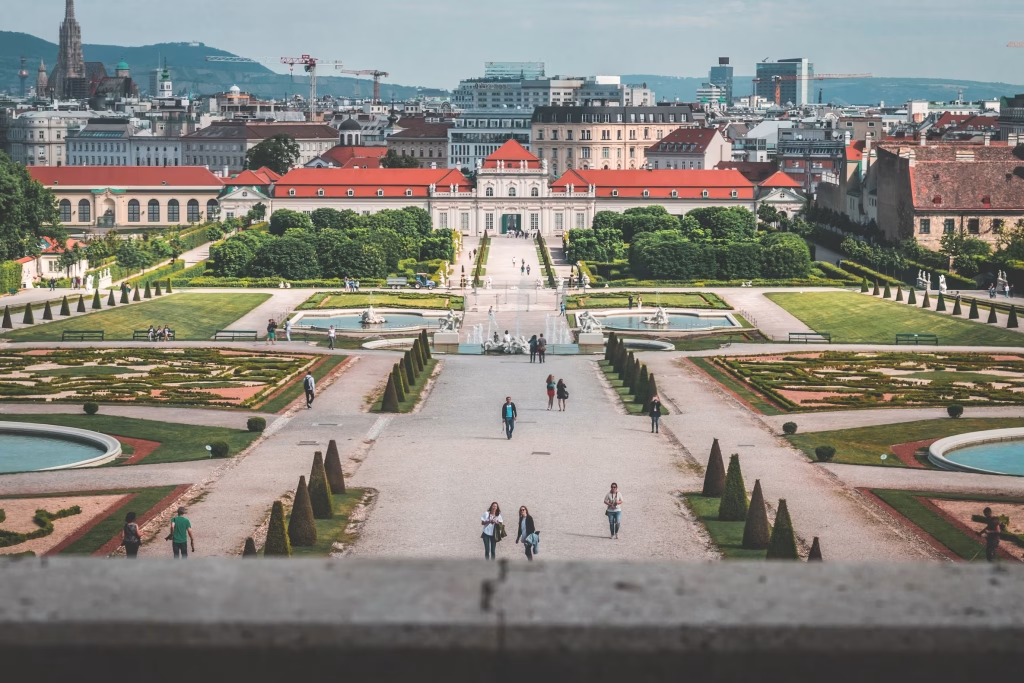
Vienna felt like a fairy tale. The grand palaces, historic buildings, and charming streets were magical. My first stop was Schönbrunn Palace, a historic imperial summer home from the 17th century. The stunning gardens and opulent rooms left me in awe, and the view from the Gloriette showcased the beautiful gardens and city beyond.
I loved visiting the Naschmarkt, Vienna’s famous market that has been around for more than 400 years. The market is filled with colorful stalls selling fresh fruits, cheeses, and meats. Tasting local treats like Viennese sausages and pastries was delightful, and the lively atmosphere made it a fun morning.
The highlight of my visit was attending a concert at the Vienna State Opera. The enchanting music and the elegant opera house made it special. Sitting in the plush seats, surrounded by a live orchestra, felt like being in another era.
Vienna’s coffee culture was a treat as well. I spent a cold afternoon in a traditional café, enjoying rich coffee and a slice of Sachertorte, a famous chocolate cake. The warm atmosphere and locals chatting over coffee made it perfect.
Overall, Vienna had a fantasy-like vibe with its grand palaces, historic structures, and charming streets, leaving a lasting impression on me.
Arrival in Vienna
After landing at Vienna International Airport (VIE), I took an inexpensive train to my hostel.
Breakfast at a Local Bakery
I started my day with an inexpensive Viennese breakfast, consisting of fresh pastries and coffee, from a nearby bakery.
St. Stephen’s Cathedral
Saw the famous Cathedral of St. Stephen. The views of the Gothic architecture were breathtaking. I skipped going inside.
Lunch at Naschmarkt
Had lunch at the busy Naschmarkt, which has a range of affordable food vendors. I decided to try one of the Middle Eastern sellers’ falafel wraps.
Hofburg Palace
Explored the Hofburg Palace grounds and visited the free exhibits at the Imperial Treasury.
Dinner at a Würstelstand
Had an Austrian sausage from a Würstelstand (sausage stand) for dinner.
Walk Along the Danube Canal
Took an evening walk along the Danube Canal. I always try to catch sunsets.
Coffee at Café Hawelka
Started the day with some coffee.
Kunsthistorisches Museum
Went on a day when tickets to the Kunsthistorisches Museum were discounted.
Lunch at a Street Food Stall
Decide on a schnitzel sandwich for lunch from a street food stand near the museum.
Stadtpark
Relaxed in the park.
Dinner at a Beisl
Had some goulash for dinner.
Evening Concert at Karlskirche
The church’s acoustics and the performance were captivating.
Haircut at Schnittzone Barbershop
Lunch at a Picnic Spot
Packed a picnic lunch from a nearby grocery store and enjoyed it in the Schönbrunn grounds.
Belvedere Gardens
Another free attraction.
Dinner at a Heuriger
Had Wiener schnitzel and potato salad for dinner.
Breakfast at Joseph Brot
Started the day with breakfast at a budget-friendly bakery near my hostel.
Museum of Natural History
Saw the extensive collection of meteorites, prehistoric fossils, and dinosaur skeletons.
Lunch at Naschmarkt
Returned to Naschmarkt for lunch, trying a different vendor this time.
Prater Park
Spent the afternoon at Prater Park, enjoying the free green spaces and taking a ride on the Giant Ferris Wheel.
Dinner at a Izakaya Shibuyaki
Had Japanese street food for dinner. The merchant gave me free food.
Getting Around Locally:
Transportation:
Accommodations:
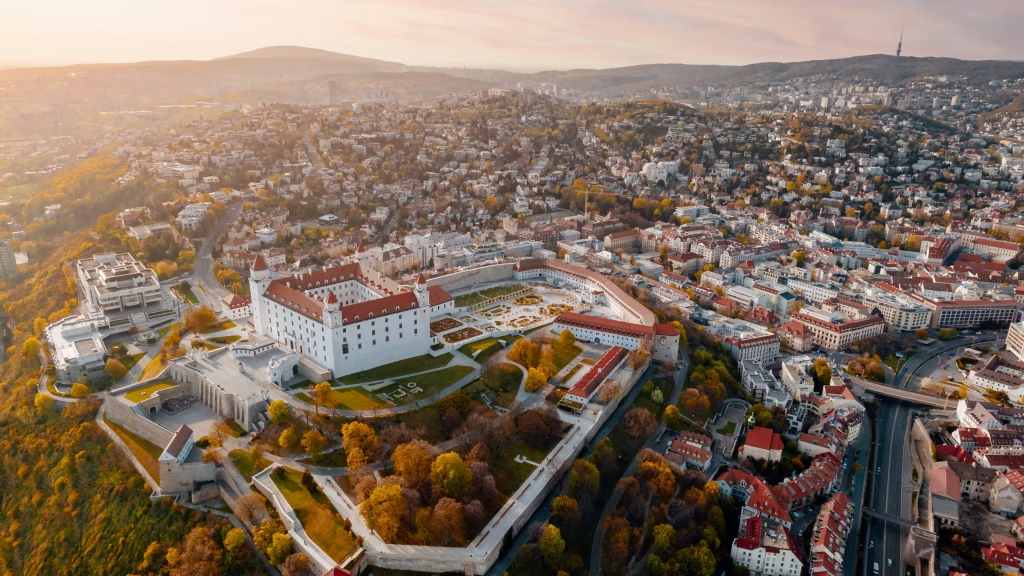
Bratislava was a delightful surprise. This charming city by the Danube River was full of history and beauty. The well-known Bratislava Castle, built in the 9th century, was another must-see for me. It offered a breathtaking view of the city and the river from its position on a hilltop. I imagined the stories from centuries past as I walked through its old hallways.
The best part was walking through the Old Town. It was like stepping into a storybook with its vibrant squares, beautiful houses, and cobblestone streets. Bratislava’s rich history is on display in the Old Town, featuring architecture from the Renaissance and Middle Ages. I adored the charming cafés and stores, especially those offering baked goods and traditional Slovak crafts.
I savored a delectable apple strudel in a quaint café while observing the passing scenery.
Arriving at Bratislava Train Station
Walking to the City Center
Grabbing Coffee at Simply
Bratislava City Tour
Lunch in the City
It’s time for lunch – my favorite part!
P.S: Don’t forget to check out Cumil the Sewer Worker statue.
Getting Around Locally:
Transportation:
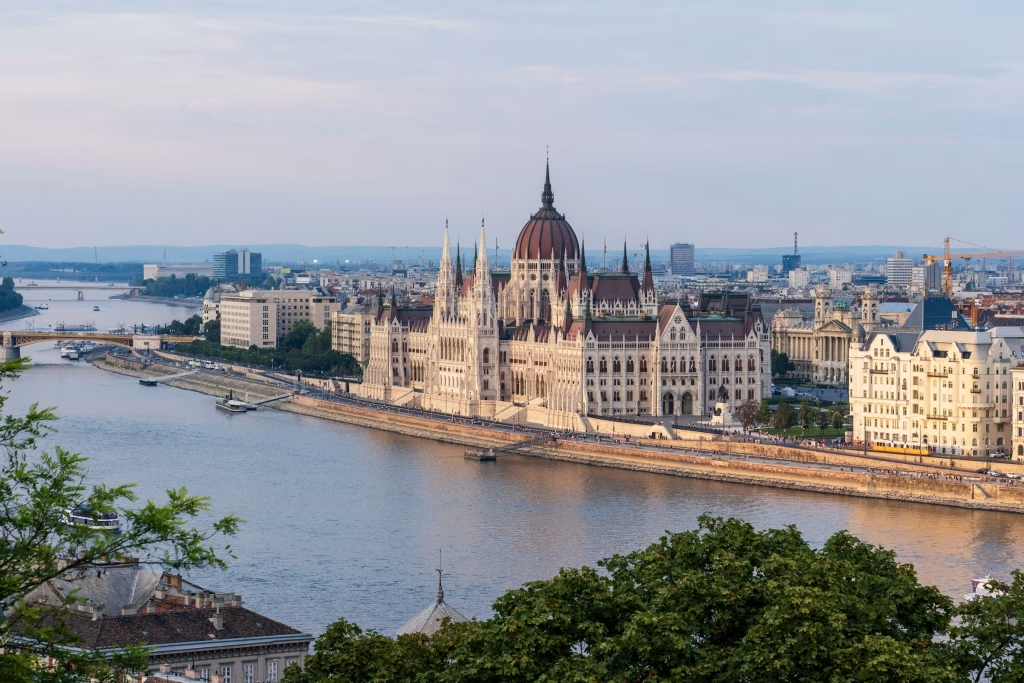
Budapest was enchanting from the moment I arrived. The city’s grand architecture and vibrant culture were captivating. My first stop was Buda Castle, situated on a hill overlooking the Danube River. The view from Fisherman’s Bastion was breathtaking, showcasing the city’s stunning skyline.
Exploring the thermal baths was a highlight. I spent a relaxing afternoon at Széchenyi Thermal Bath, soaking in the warm, mineral-rich waters. The beautiful, historic building and the peaceful atmosphere made it a perfect escape.
The food in Budapest was unforgettable, though heavy. I loved trying traditional dishes like goulash and chimney cake at the Great Market Hall, which has been a central marketplace since 1897. The bustling market, with its colorful stalls and delicious smells, was a food lover’s paradise.
One evening, I enjoyed a cruise on the Danube, watching the city’s landmarks beautifully lit up at night.
Arrival in Budapest
Jewish Quarter
Explored the historic Jewish Quarter, including the Great Synagogue. I love history, so this was a true highlight for me.
Lunch at Mazel Tov
Ruin Bars
Danube River Evening Boat Cruise
Dinner at Hungarikum Bistro
Central Market Hall
Lunch at Kiosk Budapest
St. Stephen’s Basilica
Dinner at Gettó Gulyás
Getting Around Locally:
Transportation:
Accommodations:
Planning a trip involves two main steps: first, choose a destination; second, ensure you have enough money for a fun and relaxing time.
To assist you, we’ve included a travel budget calculator on our blog. This tool provides a clear estimate of potential costs for your trip, including accommodation, transportation, meals, and activities. Budgeting for travel has never been easier with our comprehensive calculator.
The benefits of using our travel budget calculator are numerous:
Simply input the number of days you will be traveling, select a country, and choose your activities. Our calculator will then provide you with an estimated total cost for your trip.
This will allow you to plan a more budget-friendly Europe itinerary and enjoy your travels without worrying about finances.
Remember, traveling doesn’t have to be expensive.
I firmly believe in traveling light and minimizing our environmental impact. We are fortunate to live in and visit some of the most breathtaking locations that have remained untouched for ages. Imagine being deprived of an important piece of history and culture if Venice had been destroyed long ago. It is crucial that we consider the effects of our current activities on future generations. By adopting sustainable travel practices, we can ensure that these amazing places endure for future generations to enjoy.
Here are a few best practices for sustainable travel in Europe:
Look for hotels, hostels, or lodges certified by eco-friendly organizations such as Green Key, EarthCheck, or LEED.
Packing light can help reduce overall carbon emissions by decreasing the weight carried during transit. Additionally, it uses fewer resources—like laundry services—which helps save electricity and water.
Opt for the bus, train, or tram rather than a cab or rented car. Compared to private vehicles, public transit is more efficient and emits less pollution per passenger.
Spend your money in local businesses, including restaurants, shops, and tour companies. In addition to strengthening the local economy, this reduces the carbon footprint associated with shipping goods long distances.
Avoid feeding or disturbing animals, and do not remove anything from the environment, including plants or shells. Viewing wildlife from a distance protects them and allows them to continue their natural behaviors.
Learn about the sustainability practices of the places you are visiting and share this information with other travelers. Being knowledgeable enables you to make wiser decisions and encourages others to follow suit.

Nestled between the Alps and the Adriatic Sea, Slovenia is a small but captivating country that offers a perfect blend of natural beauty, rich history, and vibrant culture. With its stunning landscapes, from the towering peaks of the Julian Alps to the serene shores of Lake Bled, Slovenia is a paradise for nature lovers and adventure enthusiasts alike. The charming capital city, Ljubljana, with its picturesque architecture, lively cafes, and friendly locals, provides a warm welcome to visitors. Easily making it one of the must-see cities in Europe.
Don’t forget to check out Lake Bled.

Bosnia, at the heart of the Balkans, boasts rich history and stunning natural beauty. Sarajevo’s diverse culture and Mostar’s iconic Stari Most bridge offer a captivating blend of old and new.
With dramatic peaks, serene rivers, and lush valleys, Bosnia is enchanting. Visitors can explore historic sites, enjoy traditional cuisine, and experience warm local hospitality. Bosnia promises a unique and unforgettable journey filled with charm and intrigue.

Switzerland, with its breathtaking alpine landscapes and charming cities, quickly became one of my favorite destinations. From the bustling streets of Zurich to the serene beauty of Lake Geneva, every corner of this country offers something special.
I marveled at the majestic Swiss Alps, explored picturesque villages like Interlaken and Zermatt, and enjoyed the rich cultural heritage of cities like Lucerne and Bern. Whether skiing in winter or hiking in summer, Switzerland’s natural beauty is unparalleled. The delicious Swiss cuisine and warm hospitality made my visit even more memorable. Switzerland is a place where every moment feels like a postcard come to life.

Croatia, nestled along the stunning Adriatic coast, is a land of crystal-clear waters, historic towns, and breathtaking landscapes. Dubrovnik’s ancient city walls, Split’s Diocletian’s Palace, and the vibrant capital Zagreb offer a rich tapestry of history and culture.
From the pristine beaches of the Dalmatian coast to the cascading waterfalls of Plitvice Lakes, Croatia’s natural beauty is unparalleled. Visitors can indulge in delicious Mediterranean cuisine, explore charming coastal villages, and enjoy the warm hospitality of the locals. Croatia is a destination that promises unforgettable experiences and lasting memories.
Let me know which countries you are thinking about adding to your 2-week Europe itinerary?

Hi there! welcome to the blog! My name is Don, and I am the beard behind this site. My hope is to inspire you to rethink the how’s and why’s of travel, and the places we travel to. Whether it’s traveling on a budget, solo trips, backpacking journeys, I’ve got you covered. Since you have landed here, I am officially your personal travel guide. Uncovering travel tips, hacks, hidden destinations, and much more. Let's start this journey.
Over the past few weeks I applied for Beninese citizenship through the My Afro Origins program, and I realized something
Kabul, Afghanistan (2024) Crossing the Torkham Border is one of the most searched and misunderstood land crossings in the region.

Traveling to Yemen is not something you do on impulse. It’s one of the most misunderstood places in the world,

Azadi Tower When I told people I was traveling to Iran, the reactions were instant. Silence. Concern. Then the questions.“Is
Like this post? Pin it!
Just hover over the image and click the red save button.

A one-week trip to Europe for one person can vary in cost based on travel preferences. For round-trip flights, expect to pay between $600 and $1,200. Accommodation expenses range from $350 to $700 for budget options or $700 to $1,400 for mid-range hotels. Dining costs will add approximately $300 to $450 for budget meals or $600 to $900 for mid-range dining experiences. Transportation, whether using public transit or renting a car, will likely cost between $100 and $500. Activities and sightseeing could range from $200 to $400 on a budget or $400 to $800 for more elaborate experiences. Miscellaneous expenses, including travel insurance and souvenirs, will add an extra $150 to $300. Overall, the total estimated cost for a budget trip is between $1,700 and $3,250 per person, while a mid-range trip could total between $3,000 and $5,100 per person.
Apart from this blog, organizing a Europe trip involves setting a budget, choosing your destinations, and planning your itinerary. Book your flights and accommodations early, and consider transportation options such as rail passes and local public transit. Make reservations for popular attractions and look for free activities. Ensure your passport is valid, check visa requirements, and don’t forget to purchase travel insurance. Pack versatile clothing and keep copies of important documents. Get a local SIM card or an international mobile plan, and carry some local currency while primarily using cards. Finally, notify your bank of your travel plans to avoid card issues.

Subscribe now to keep reading and get access to the full archive.


