
Crossing the Torkham Border: A Complete Guide (2026)
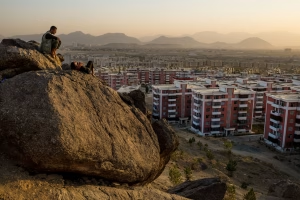
Kabul, Afghanistan (2024) Crossing the Torkham Border is one of the most searched and misunderstood land crossings in the region.


When I told people I was traveling to Iran, the reactions were overstimulating. Silence. Concern. Then the questions.
“Is it safe?”
“Aren’t Americans banned?”
“Why would you even go?”
The truth is, Iran ended up being one of the most misunderstood, welcoming, and culturally rich countries I’ve ever visited. And almost nothing I experienced on the ground matched what I had been told growing up or what I saw in the headlines.
In my opinion, this isn’t a polished tourism destination built for outsiders. Iran is raw, deeply human, proud of its history, and full of contradictions. It’s a place where strangers invite you into their homes, where hospitality feels personal, and where politics and people could not be more different.
This guide isn’t based on assumptions or second-hand stories. It’s based on what I actually experienced traveling through Iran, from visas and logistics to daily life, safety, culture, and what surprised me the most.
If you’re curious about traveling to Iran in 2026 and want an honest, on-the-ground perspective, this guide is for you.
This guide is a complete analysis made to tell how safe is Iran from an American perspective, which includes my personal experience, local insights, and safety.
@thebeardedbackpacker Welcome to Day 1 as an American in Iran 🇮🇷 This was my first time visiting Iran and I didn't know what to expect, but little did I know I was in for a huge surprise. Follow along as I show you a side of Iran the media will not. #iran #persia #irantravel #irantraveling #irantourism #iraniantiktok #tehran
♬ Intro - Mad Dog
Answering Your Top Question:
Can Americans Visit Iran?
The short and sweet answer is, yes. I’m American and successfully visited Iran.
Do keep in mind, you can only visit by booking a guided tour.

I went to Iran because it’s one of the most misunderstood countries in the world. Everyone talks about it. Very few people actually go. I just wanted firsthand experience. Iran is almost always framed through politics and conflict, and I wanted to see the people, the cities, and daily life without filtering everything through a headline.
It’s also important to mention that I left Iran just a few days after the war with Israel broke out ( My PEOPLE Magazine Interview is here). When I was there, the atmosphere on the ground felt calm and normal, but things shifted quickly after I left. That timing matters, because it shows how fast narratives and realities can change in this region, and how different being there feels compared to watching events unfold from the outside.
Traveling through Iran as an American and as a Black man came with a level of curiosity that I have experienced in many other places. People stared sometimes, but it never felt aggressive or uncomfortable. It felt like genuine curiosity. People wanted to know where I was from, why I chose Iran, and how I ended up there.
What stood out was how people reacted once they realized I was American. I didn’t sense any hostility toward Americans at all. If anything, I felt a real sense of admiration. People often lit up when they heard I was from the U.S., asked questions about daily life there, and seemed genuinely interested. At the same time, there was sometimes confusion. It’s not every day they meet an American traveler, and even less common for them to meet a Black American. A few people initially assumed I was Arab, and one little girl genuinely thought I had just arrived straight from Africa.
Those moments never felt awkward. They felt human. They showed how limited exposure shapes assumptions, not in a negative way, but in a curious and honest way. I was treated with respect throughout the trip, and I never felt targeted because of my race or nationality. If anything, being different often opened the door to conversations that felt more real once people understood who I was and why I was there.
The admiration I felt wasn’t political or performative. It felt personal. Whatever tensions exist between governments never showed up in my day to day interactions. That disconnect between politics and people was one of the clearest things I noticed while traveling through Iran.
@thebeardedbackpacker Ever wondered how to visit Iran as an American? In this video, I break down exactly how I got into Iran on a U.S. passport — from the visa approval process, working with a government-approved tour agency, picking up my visa in Oman, to navigating sanctions, banking issues, and traveling with a licensed guide. Most people think Iran is off-limits. The truth? You can go you just need to understand the system. #iran #irantravel #irantourist #irantourism #tehran #iraniantiktok
♬ Intro - The xx
Traveling to Iran requires planning and the visa process depends heavily on your nationality. This is not a destination where you can show up without preparation.
Many travelers can apply for an Iran e visa but you cannot fully complete the process on your own. Certain nationalities especially Americans British and Canadians are required to travel with a licensed local guide and follow a pre approved itinerary. Independent travel is not permitted for these passports.
I personally picked up my Iran visa in Muscat Oman because I was flying from Oman into Iran. I went directly to the Iranian Embassy in Muscat located in the Shati Al Qurum area. No appointment was needed. You simply walk in. I highly recommend going early in the morning since the process moves faster and lines tend to form later in the day.
Due to international sanctions you can only pay in cash. Credit cards and debit cards do not work and are not accepted. Payment must be made in Omani riyal so make sure you have enough cash before arriving. If you show up without Omani riyal you will not be able to complete the process.
The visa application process is bureaucratic and detailed. You are required to disclose all of your social media accounts. I strongly recommend reviewing your profiles beforehand and removing or archiving any content related to past travel to Israel. Ignoring this can cause delays or rejection.
Once the visa is approved everything on the ground runs smoothly. Your guide assists with visa authorization codes airport arrival procedures hotels internal transport and daily logistics. Traveling with a guide removes confusion and significantly reduces the risk of mistakes.
My guide was Ali and he was phenomenal. He handled logistics explained cultural expectations and made the entire experience far less stressful and more efficient.
Iran is not a country you improvise but it is a country that rewards preparation and patience.
My Guide: Ali | Contact him here.
Having a guide in Iran does not mean everything is rigid or done strictly by the book. While there is an approved itinerary on paper, in reality we were able to be flexible and spontaneous when the situation allowed it. We did not follow every moment exactly as planned, and some of the best experiences came from going slightly off itinerary.
For example, I was able to do things like getting a local haircut and stopping in places that were not originally planned. Those moments felt natural and human, not staged. My guide was extremely flexible and knew when it was fine to move freely and when it was better to stick closer to the plan. That balance made a huge difference.
At the same time, having a guide meant someone was always looking out for me. He handled logistics, explained cultural boundaries, and stepped in when situations could have become awkward or misunderstood. Most major expenses such as accommodation, transportation, and daily planning were already paid for, which removed a lot of stress and allowed me to focus on the experience itself.
There were plenty of moments where I could walk around, sit in cafes, and observe daily life on my own, but always with a clear understanding of where my limits were. The guide did not control the experience. He made sure it stayed smooth, respectful, and realistic within the context of Iran.
That flexibility combined with structure is what made traveling Iran feel possible rather than restrictive.
This is always the first question, and understandably so.
Iran feels very different from how it’s portrayed in Western media. In the cities and regions I visited, daily life felt calm, structured, and surprisingly relaxed. Families were out at night, cafés were full, and people were eager to talk once they realized I was a traveler, not a journalist.
That said, Iran is not a country where you ignore the rules. Laws are strict, behavior expectations are clear, and political conversations are something you navigate carefully. But in terms of personal safety, especially from crime, Iran felt safer than many places I’ve visited.
Travel smart. Respect local customs. And you’ll likely be shocked by how normal everything feels.

"Taking that first step, that first flight, first solo trip may seem scary, but it's those very first things that can potentially take you a thousand miles and places."
-The Bearded Backpacker Tweet
For many travelers, yes.
For others (including Americans), no.
If you’re required to have a guide, you’ll be accompanied throughout the trip. Your itinerary is approved in advance, and flexibility is limited. That might sound restrictive, but in reality, it opens doors you wouldn’t access alone, local homes, conversations, and places that aren’t tourist-facing.
Iran doesn’t allow true backpacking freedom for everyone, but it offers something deeper: access with context.
My Guide: Ali | Contact him here.

This is where the biggest disconnect lies.
Iranian daily life felt… normal.
Families were out late at night. Couples walked together quietly. Young people laughed, flirted, debated. Cafés were full. Parks were busy. Life moved forward.
There’s a visible separation between public rules and private reality. People know what to show and what to keep to themselves. It’s subtle, but once you notice it, you understand Iran better.
Iran doesn’t feel frozen. It feels patient.
What stayed with me the most were the people.
At first, interactions were a little cautious, which I expected. Once people realized I wasn’t there to cause problems or make judgments, things relaxed quickly. People asked where I was from, why I came, and what I thought of Iran so far. Those questions came up often.
No one talked about politics with me (which I never talk about). Conversations stayed focused on everyday things like food, family, work, and life in general. A lot of people just wanted to sit, drink tea, or talk for a few minutes.
Nothing felt forced or performative. It felt like normal curiosity and everyday kindness, and that’s what stayed with me.

Iran is an Islamic Republic, and the rules are real.
Women wear headscarves. Men dress modestly. Alcohol is illegal. These things are enforced.
But Iran isn’t as black-and-white as people think. Religion is visible, but people practice it differently. Some are deeply religious. Others are not. You start to see how people navigate the system rather than openly fight it.
During my time here, I made a point to wear long sleeve shirts to cover up my tattoos. It’s just a personal preference.
Understanding that balance is key to understanding Iran.
This is important for anyone creating content.
Filming in Iran is allowed, but you need to be mindful. Most people didn’t care at all, especially men. However, in the capital, I noticed some women were visibly uncomfortable when a camera was out.
I don’t think it was about me personally. I strongly suspect it had to do with headscarves. Some women didn’t have one on, pushing boundaries quietly, and a camera could feel risky.
Because of that, I was careful about where and how I filmed. My guide also helped steer me away from situations that could make people uncomfortable or attract attention.

Credit and debit cards do not work in Iran. Cash is essential. Because I traveled with a guide, most major expenses were already included in the tour price, including hotels, transportation, and daily logistics. As a result, I didn’t spend much money day to day outside of small personal purchases.
The hotels were comfortable and better than I expected. Nothing luxury, but clean, quiet, and reliable. Since accommodation was included in the tour package, I didn’t have to negotiate prices or search for places to stay. I also included a video of one of the hotels in this guide so people can see exactly what to expect.
Internet access in Iran works, but many apps and websites are blocked. During my time there, platforms like Instagram, X, and some news sites were not accessible without a VPN. Messaging apps worked inconsistently. Because of that, a VPN is necessary.
I used ExpressVPN the entire time. I set it up before arriving and had no major issues connecting once I was in the country. Speeds varied depending on location, but it allowed me to access blocked apps and stay connected when needed.
If you don’t prepare for cash and a VPN ahead of time, daily logistics in Iran become much more frustrating than they need to be.
@thebeardedbackpacker Hotels in Iran....🇮🇷 #iran #irantravel #iraniantiktok #tehran
♬ Blinding Lights - Instrumental - The Weeknd
This is the most important question.
My experience reflects Iran before the regional situation escalated. I left a few days after the war broke out, and conditions changed quickly afterward.
Iran can feel calm on the ground while tensions exist at a higher level. That doesn’t mean nothing can happen. It means timing matters.
If you’re considering Iran now:
• Monitor current events closely
• Understand visa and guide requirements
• Accept that plans can change quickly
• Don’t ignore government advisories
Iran isn’t a casual destination. It requires patience, planning, and flexibility.
Overall, I did it and I think you will be fine.
One of the biggest cultural surprises was how women wore their headscarves. Unlike many Muslim countries, in Iran a lot of women don’t fully cover their hair. Scarves are often pushed far back, barely hanging on. It shocked me at first and honestly felt like stepping back into the 1970s—a strange mix of strict rules on paper and quiet rebellion in daily life. Another thing that stood out was how normal evenings felt, with cafes full, people socializing, and families out walking. It didn’t match the tense image many people have of Iran.
Iran wasn’t easy. It wasn’t carefree. And it definitely wasn’t a place you just show up to without thinking things through. Everything required planning, awareness, and patience. There were rules to follow, lines you didn’t cross, and moments where you had to pause and read the room instead of acting on instinct.
But it was real. Nothing felt staged or built for tourists. Daily life carried on regardless of how the country is portrayed from the outside. People went to work, met friends, argued, laughed, and lived normal lives within a system they didn’t choose but knew how to navigate.
The trip challenged a lot of assumptions I had, even ones I didn’t realize I was carrying. It forced me to slow down, listen more, and separate people from politics. What I experienced on the ground didn’t match the version of Iran I’d grown up hearing about, and that contrast stuck with me long after I left.
I don’t regret going for a second. At the same time, I understand why Iran isn’t for everyone. If you need total freedom, spontaneity, and zero restrictions, this won’t be your place. If you’re uncomfortable with uncertainty or shifting conditions, it can be mentally draining.
If you decide to go, go informed. Go knowing the rules, the context, and the reality of traveling there. Pay attention to timing, because things can change quickly. In Iran, timing matters just as much as intention, and understanding that difference is what makes the experience worthwhile rather than overwhelming.
If this Iran Safety Guide was helpful, please like, comment, and share!

Hi there! welcome to the blog! My name is Don, and I am the beard behind this site. My hope is to inspire you to rethink the how’s and why’s of travel, and the places we travel to. Whether it’s traveling on a budget, solo trips, backpacking journeys, I’ve got you covered. Since you have landed here, I am officially your personal travel guide. Uncovering travel tips, hacks, hidden destinations, and much more. Let's start this journey.
Kabul, Afghanistan (2024) Crossing the Torkham Border is one of the most searched and misunderstood land crossings in the region.

Traveling to Yemen is not something you do on impulse. It’s one of the most misunderstood places in the world,

Sitting inside a traditional Libyan house with traditional Libyan clothes on. When I told people I was going to Libya,

Crossing the Iraq-Kuwait border may sound intimidating, but with the right preparation, it’s totally manageable. Whether you’re heading to Basra,
In my case, no. I didn’t have any issues returning to the United States.
When I came back, I went through the normal re-entry process. I wasn’t detained, questioned extensively, or pulled aside for secondary screening beyond what’s typical. Traveling to Iran alone did not cause any problems for me.
That said, it’s important to be realistic. Your experience can vary depending on your passport, travel history, and current geopolitical situation. You should always be prepared to answer basic questions about where you traveled and why. Having documentation, return tickets, and a clear explanation of your trip helps.
For me, re-entering the U.S. was straightforward, and Iran did not create any lasting issues at the border.

