

How to Get Benin Citizenship Through the Afro-Descendant Program (Step-by-Step Guide)
Over the past few weeks I applied for Beninese citizenship through the My Afro Origins program, and I realized something


When I told people I was going to Libya, the reactions ranged from wide eyes to confused stares. “Is that even safe?” “Why Libya?” To be honest, I didn’t know exactly what to expect.
But what I found blew me away, ancient Roman cities rising from the desert, golden sand dunes stretching endlessly under the Saharan sun, and some of the warmest, most curious people I’ve met on my travels.
This isn’t your typical tourist destination, and that’s what makes it so special. Libya is raw, misunderstood, and absolutely worth the trip if you’re willing to venture off the beaten path.
In this guide, I’m sharing everything I learned while exploring Libya: from how to get a visa, and what to expect from the food, culture, and day-to-day travel.
If you’re looking for an honest, on-the-ground travel guide to Libya in 2025, you’re in the right place.
Population
Libya has a population of around 7 million people, making it one of the least populated countries in North Africa.
Despite its massive land size, most people live along the Mediterranean coast, especially in cities like Tripoli, Benghazi, and Misrata.
A Homogeneous Society, With Subtle Layers
Most Libyans identify as Arab, but regional differences are strong:
West Libya feels Maghrebi—like Tunisia or Algeria
East Libya has an Egyptian influence in dialect and customs
This East-West cultural divide is also reflected in Libya’s political split, with different governments operating in each region.
Berber Identity: Proud and Visible
Berbers (or Amazigh) make up about 5–10% of the population. They’re indigenous to North Africa and proudly preserve their language (Tamazight), dress, and music, especially in regions like Nafusa Mountains and Ghadames.
Berber flags fly high in many towns, signaling a strong, embraced dual identity: Berber and Libyan.
Language
Arabic is the official language:
West Libya = Tunisian-style Arabic
East Libya = Egyptian-style Arabic
English is not widely spoken, but you’ll likely have a local guide.
Religion & Traditions
Nearly all Libyans are Sunni Muslim. Religion is taken very seriously:
Women almost always wear hijab, and many wear niqab, especially in rural areas.
Despite being a secular state under Gaddafi, Libya today feels more conservative than Morocco or Tunisia.
Libyan Cuisine: Humble and Hearty
Couscous is the signature dish—juicier than Morocco’s
Grilled meat & rice is a staple
Pasta & pizza reflect Italian influence (try Caffe di Roma in Tripoli)
Usban: a rice-and-meat-filled sausage, heavy but flavorful.
Coffee Over Tea
Thanks to Italian influence, coffee is a big deal, even in rural towns. Expect strong, foamy espresso-style cups almost everywhere.
Alcohol
High Urbanization: Over 80% of Libyans live in urban areas despite the country being mostly desert.
Family-Centric: Libyan society is deeply communal, with strong family and tribal ties shaping daily life and social norms.
Youthful Nation: A large percentage of the population is under 30, but youth unemployment is a major issue.
Education: Libya has a high literacy rate (over 90%), with free education provided by the state.

Just so you know this post contains some affiliate links. Completely free to you, I may earn a small commission when you make a purchase.
Answering Your Top Question:
Can Americans Visit Libya?
The short and sweet answer is, yes. I’m American and successfully visited Libya. This guide will show you how.

You can’t really talk about traveling to Libya without first understanding where the country’s been, and why so few people have seen what I just experienced.
Back in 2011, Libya was caught in the wave of the Arab Spring that swept across North Africa. What started as peaceful protests against Muammar Gaddafi, Libya’s longtime dictator, quickly turned into a full-blown civil war.
A year later, Gaddafi was gone. After more than 40 years under his rule, Libyans had a shot at rebuilding their country.
But it didn’t go as hoped.
Instead of unity, things fractured. Groups that had once fought side by side against dictatorship started turning on each other, each chasing power and control.
The country split, literally, into two main governments: one in the west (Tripoli) and another in the east (Benghazi), each backed by different militias and foreign powers.
Years of conflict followed. But in October 2020, something shifted. Exhausted by years of war, both sides signed a ceasefire.
And while peace in Libya is still fragile, that agreement opened the door for something new, hope, and eventually, tourism.
When I visited, I entered through the west, like most travelers do. But here’s the good news: as of 2025, Libya’s eastern region is finally open to tourists too.
That means you can now explore cities like Benghazi and discover the lesser-seen side of the country, all on a single visa.
Yes, Libya has a complicated history. But if you’re the kind of traveler who wants more than postcards and beach resorts, if you crave places that challenge your perspective, then Libya is a journey worth taking.

Let’s be real. When you think “Libya,” safety probably isn’t the first thing that comes to mind. That’s fair. The news for the past decade has painted Libya as a place of nothing but conflict and chaos.
But here’s what I found on the ground: Libya today, especially in the western part of the country, is not what the headlines make it out to be.
Since the peace agreement was signed in 2020 between the rival governments in the east and west, there’s been a noticeable shift.
Yes, tensions still exist, and yes, you might hear about occasional clashes between armed groups. But as someone who just traveled through the country, I can say that for tourists, especially in the west, things felt calm and surprisingly welcoming.
And here’s something that really adds to your peace of mind: when you travel to Libya, you typically need to go through a licensed tour agency. That means your trip will include a local guide, a driver, and often a police escort or additional security staff.
Some people might find that intense, but honestly, it’s all tied into your safety and well-being.
These escorts aren’t there to hover over you; they’re there to make sure everything goes smoothly, from navigating checkpoints to helping you experience the country without stress.
The locals I met, from Tripoli to the desert towns, repeated one thing over and over: “Libya is safe now. You are welcome here.”
And honestly, I felt that. I was walking through markets, sipping tea in quiet cafes, and exploring ancient ruins without a single issue. I even got a haircut in a random barbershop.
Libya is still Libya, it’s complex, layered, and unpredictable at times. But if you travel smart, stay informed, and go with local guides who understand the terrain, you’ll likely feel as safe as I did.
Not to mention, traveling this way gives you access to parts of the country you wouldn’t be able to reach on your own. But we’ll dive deeper into the logistics of booking a tour and what to expect from your travel team later on.
For now, just know: it’s absolutely possible to explore Libya safely, and it might just surprise you in the best way.
Libya caught me off guard.
The areas I visited, especially in the west, where tourists are currently allowed, didn’t feel like a country recovering from over a decade of instability.
In fact, one of the first things I noticed was how normal things felt. In Tripoli, the capital, I barely saw any military presence( besides the dozens of checkpoints on the way to Ghadames).
No tanks, no patrolling soldiers. People were out in the markets, hanging at cafés, kids playing in the streets. Life felt calm, not tense.
Of course, that doesn’t mean the country hasn’t seen its share of destruction. Misrata, for example, definitely carries scars.
The city’s main avenue still shows signs of what it went through during the war, and we did spot a few buildings with bullet holes here and there.
Tripoli’s skyline? Still standing proud. The ancient sites? Untouched. The vibe? Surprisingly laid-back.
To be clear, I only explored a portion of the country, mainly in the west. Places like Benghazi in the east saw heavier fighting, and their story is different.
But from a traveler’s point of view, the areas open to tourism today feel intact and, more importantly, welcoming.
If you’re expecting ruins and rubble, you might be shocked by how “normal” Libya looks and feels. And that’s part of what makes it so fascinating, it’s a country shaped by conflict, yes, but not defined by it.

Let me be straight with you, getting a visa for Libya sounds easy now, but the process is still very… Libyan. In 2024, the government launched a cool new e-visa system, which is supposed to simplify things.
On paper, you apply online, wait about five business days, and voilà—you’re approved. But in reality? It can be tricky.
When I applied, the system completely scrambled my personal info; my passport number and date of birth were mixed up, and I had to start from scratch with a whole new application.
Not exactly the smooth experience you’d hope for when planning a trip to a country that already requires a bit of navigation.
However, all of this was worth it, and I understand things happen.
Also, due to Arabic naming conventions, the system asks for your father’s name, and it automatically tacks it onto yours.
So when your visa comes through, don’t be surprised if your name looks different than what you’re used to seeing. It’s normal, just something to be aware of.
Processing Time: Around 5 working days
Valid For: 90 days from the date of issue
Independent Travel: Still not allowed. You must be sponsored by a local agency.
Now, is this system going to stick around? Who knows. Libya has a habit of changing things without much warning (they tried a visa-on-arrival policy in 2023, it lasted all of 3 months).
So yes, you can get into Libya much more easily now, but do yourself a favor: book with a reputable agency, be prepared for a few glitches, and don’t try to DIY this trip. Trust me, it’s not worth the stress.
This part is important: many nationalities cannot enter Libya without a licensed guide and sponsor. You can’t just book a flight and wing it. If you try to leave the airport without an official pickup, you’ll likely be deported on arrival.
That’s why I booked through Cyrene Tourism Group, run by a guy named Hisham (Whatsapp +00218924796672). I can’t recommend him enough, super responsive, knows the system inside and out, and makes sure all your paperwork is in order before you even land. He offers two main packages:
A 3-day tour without Ghadames
A 7-day tour that includes Ghadames (I went with the 7-day—absolutely worth it)
And yes, your guide and driver will be there to meet you as soon as you land, because without them, you literally wouldn’t be allowed to leave the airport.
Note: Nationals from Algeria, Egypt, Jordan, Mauritania, Morocco, Syria, Tunisia, and Turkey are visa-free.

"Taking that first step, that first flight, first solo trip may seem scary, but it's those very first things that can potentially take you a thousand miles and places."
-The Bearded Backpacker Tweet

Best Time: November to March
This is the sweet spot. The weather cools down, making it way easier to enjoy everything. Just know that temperatures can drop close to 0ºC at night in December and January, especially out near Ghadames or other desert towns.
If you’re traveling in those months, pack warm layers or a proper jacket. Trust me, those cold desert mornings hit hard.
❄️ My Experience: Late February
I visited in late February, and honestly, I think I got lucky. The weather was consistently pleasant during the day, sunny, dry, and great for sightseeing. Mornings and evenings were definitely chilly, especially in places like the Nafusa Mountains, but a light coat or warm hoodie was enough to stay comfortable. During peak hours, though? Absolutely perfect.
🔥 Worst Time: June to September
Avoid summer if you can. From June to September, Libya becomes brutally hot, especially inland. We’re talking 40ºC+ days where you’ll want to be anywhere but outside. I met a few locals who said even they avoid sightseeing in the summer months unless absolutely necessary.
If you want good lighting for photos, comfortable walking temps, and cool desert nights around a fire, plan for winter or early spring.

Flying into Libya
The main airport you’ll be flying into is Mitiga International Airport (MJI) in Tripoli. Libya technically has two airports in the capital, but only Mitiga is operational, so double-check your ticket to make sure you’re not booked into the wrong one.
I flew into Libya in late February, coming from Algeria to Tunisia, then from Tunis to Tripoli. I flew Tunis Air, and I’ll be honest, there were barely any people on the flight.
On the way in and out, maybe four or five others were with me. It felt surreal, but also kind of wild to realize how under-the-radar Libya still is as a travel destination.
🛩️ Which Airlines Fly to Libya?
Tunis Air: Only operates 2–3 flights a week, so your dates need to be flexible.
Libyan Wings: Flies from Tunis daily. If you run into issues booking, your local guide or someone in Libya can visit a physical office and pay in cash.
Round trip flight Tunis Tripoli with Libyan Wings: ~$110
MedSky Airlines: Another option that flies into Libya. I recommend downloading the eTravel app to check schedules and book flights (especially for MedSky, Libyan Wings or other regional airlines).
💡 Pro Tip: I was told by both my booking agency and local guide that non-Libyan citizens aren’t allowed to fly with Libyan Airlines, not sure how true this is.
Wi-Fi in Libya isn’t great, especially outside of hotels or major cities. Don’t expect fast speeds or stable connections, and definitely don’t rely on public Wi-Fi for uploading content or making video calls.
That said, getting a local SIM card is easy and affordable, and it’ll save you a lot of headaches.
As soon as I landed at Mitiga Airport, I was able to pick up a SIM card without any issues. I went with Libyana, one of the main providers, and for just 39 LYD (around $8 USD), I got 20GB of data, which was more than enough for my 7-day trip.
Coverage was actually better than I expected, especially in and around Tripoli, Misrata, and the main roads leading out toward the desert towns.
📱 Pro Tip: Bring an unlocked phone, and make sure to have cash (Libyan dinars) on hand to pay for the SIM, since card payment isn’t usually accepted. Your guide can also help you get set up quickly.
While the signal can drop in more remote areas (like near Ghadames), I was still able to post updates, check maps, and stay connected with my guide. Just don’t expect to stream Netflix in HD while riding through the desert.
If you’re working remotely or need a solid connection for uploads, download everything you need before you arrive, and treat Libya like a digital detox zone.
One of the first things I always recommend when traveling, especially to places like Libya, is to use a VPN, and trust me, this trip was no exception.
I personally used ExpressVPN during my entire stay. It was super easy to set up, fast, and didn’t slow down my connection much at all, even with the already limited internet access in some areas.
Here’s why it’s important:
Public Wi-Fi isn’t secure in Libya (or in most countries, honestly), and using a VPN adds a layer of protection to your connection.
Certain websites and content are censored or restricted, so if you want access to things like social media, news outlets, or even your favorite YouTube videos without restrictions, you’ll need a VPN.
It also helped me stay connected to some of my accounts and apps that were glitchy or inaccessible without a VPN.
🔐 Pro Tip: Download and set up your VPN before you land in Libya. Some VPN websites might be blocked, so it’s better to have it ready to go.
Avoid filming checkpoints, women, and military buildings.
That’s my two cents.

Credit and debit cards are basically useless in Libya; there’s no international card system in place, and most places, even in Tripoli, operate entirely on cash.
I knew this going in, so I brought all my spending money in cash (euros and USD are both widely accepted for exchange). That said, you probably won’t need much, especially if you’re traveling with a local agency like I did.
Most tours cover everything, transportation, hotels, meals, and even your guide and tourist police chaperone.
For reference, during my 7-day trip, I spent maybe $30, mostly for a few meals in Tripoli that weren’t included in the package. So yeah, budget friendly, once you’re there.
Where to Exchange Money in Libya
Your tour guide will take care of this. Mine brought me straight to a money exchange spot tucked away in the old medina of Tripoli.
Exchange rates are usually better inside Libya than at the borders or airports, so don’t worry about converting everything in advance. Just make sure to bring crisp, newer bills (old or damaged notes might get rejected).

Honestly, this was my first time ever purchasing travel insurance, and I’m so glad I did. I highly recommend it. The only challenge was finding a company that would cover me for a trip to Iraq.
Fortunately, Allianz Travel came through with an affordable plan that provided the coverage I needed. The best part? I didn’t have to file a claim or deal with any issues during my trip, making it an even better value for the price.
Check out Allianz Travel plans here.

If this Libya Guide was helpful, please like, comment, and share!

Hi there! welcome to the blog! My name is Don, and I am the beard behind this site. My hope is to inspire you to rethink the how’s and why’s of travel, and the places we travel to. Whether it’s traveling on a budget, solo trips, backpacking journeys, I’ve got you covered. Since you have landed here, I am officially your personal travel guide. Uncovering travel tips, hacks, hidden destinations, and much more. Let's start this journey.
Over the past few weeks I applied for Beninese citizenship through the My Afro Origins program, and I realized something
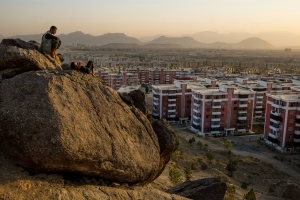
Kabul, Afghanistan (2024) Crossing the Torkham Border is one of the most searched and misunderstood land crossings in the region.

Traveling to Yemen is not something you do on impulse. It’s one of the most misunderstood places in the world,

Azadi Tower When I told people I was traveling to Iran, the reactions were instant. Silence. Concern. Then the questions.“Is
Like this post? Pin it!
Just hover over the image and click the red save button.

Libya has become safer in recent years, especially in the west around Tripoli, but it’s still not as stable as other destinations. Travel is only allowed with a guide, and tourists are usually accompanied by local officials. If you go with a trusted tour operator, it can be relatively safe, but it’s not risk-free.


2 responses to “The Best Libya Travel Guide in 2026”
This is an excellent guide, thank you.
Thank you, Timothy.